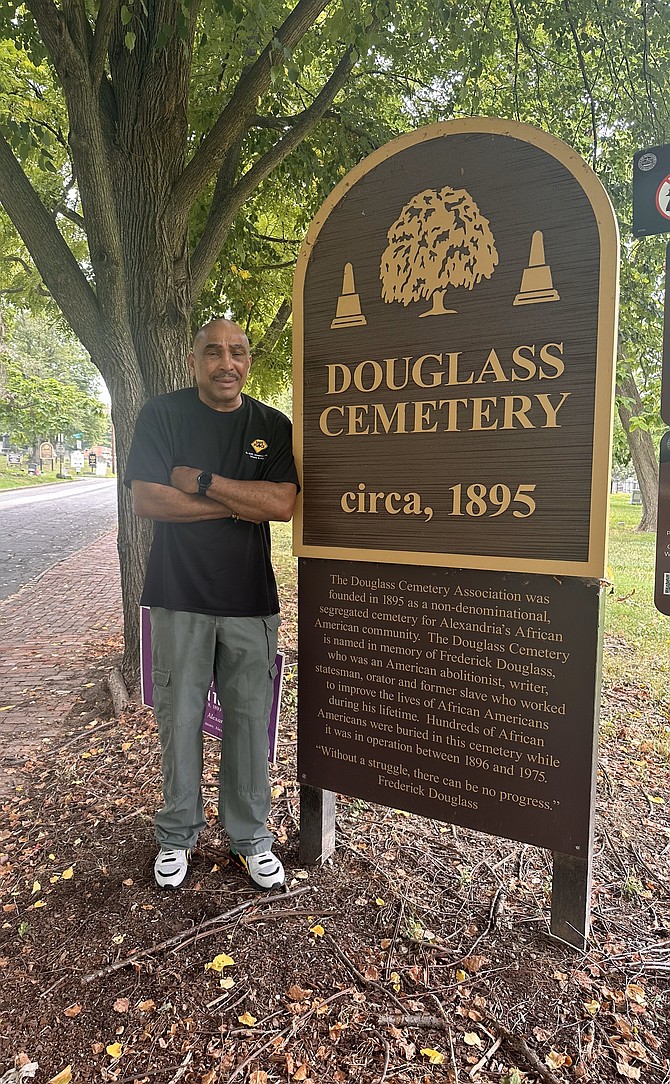
Juneteenth committee member Michael Johnson stands at the entrance to the historic Douglass Cemetery on Wilkes Street. The cemetery kicks off the city’s Juneteenth day of events with a memorial program at 10 a.m.
Alexandria is a city filled with history. Founded in 1749 as a port city along the Potomac River, Alexandria grew into one of the busiest commercial centers in early America. Its location made it a critical hub for trade, which tragically included the buying and selling of enslaved people of all ages.
As June 19th approaches, the day in 1865 when enslaved people in Galveston, Texas, finally learned they were free more than two years after the Emancipation Proclamation, the Juneteenth holiday in Alexandria is more than a celebration. It is a powerful act of remembrance.
“We have put together a great program,” said Juneteenth committee member and noted historian Char McCargo Bah. “Highlights of this year's events will include visits to Douglass Cemetery, the Alexandria Black History Museum, and Freedom House, which was a former slave pen during the Civil War. Shiloh Baptist Church, which was founded during the Civil War, will also host a special Juneteenth program. An evening festival will conclude the festivities at Charles Houston Recreation Center.”
Alexandria in the 1820s and 1830s had become a major center of the domestic slave trade, which expanded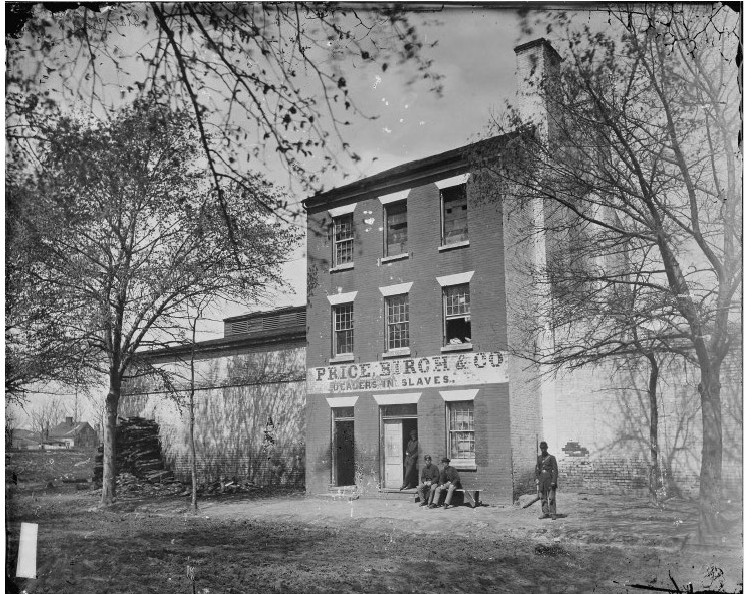 after the international slave trade was banned in 1808. During this period, enslaved men, women and children were forcibly transported from the Chesapeake region to plantation economies in the Deep South.
Enslaved individuals were often held in local jails and private “slave pens” before being sold or transported. Some were marched in chains overland in groups called coffles, while others were shipped from Alexandria’s busy waterfront to cities such as New Orleans.
When the Civil War began, Alexandria was quickly occupied by Union forces in 1861. This transformed the city into a refuge for enslaved people escaping bondage.
Thousands of formerly enslaved individuals often called “contrabands” came to Alexandria seeking safety and freedom. The city’s economy and social structure began to shift as these individuals found new opportunities, established communities and helped support the Union war effort.
Even former slave-trading sites were repurposed during this period. The building at 1315 Duke Street, once used to imprison enslaved people, later served as a Union military prison and a hospital for Black soldiers.
Today, Alexandria’s Juneteenth observance connects these historical sites to present-day celebration and reflection.
Juneteenth in Alexandria will begin at the historic Douglass Memorial Cemetery. Established in 1895 as a segregated African American burial ground, it honors generations of Black Alexandrians and remains a site of remembrance today.
“Understanding what African Americans contributed to the city should give all of us a sense of pride regardless of race, creed or color,” said Michael Johnson, who is spearheading the restoration of Douglass Cemetery. “It is acknowledging and correcting some of the wrongs that occurred before many of us were even born.”
Johnson said that noted historian and Howard University professor Elizabeth Lewis, a co-contributor of research to the Alex Haley Roots mini-series, will be the mistress of ceremonies at the Douglass Cemetery ceremony.
In the afternoon, the Washington Revels Jubilee Voices concert at Shiloh Baptist Church brings history to life through African American spirituals, storytelling and cultural traditions, many of which originated during slavery as expressions of hope and resistance.
“Four churches were founded during the Civil War,” Bah said. “Beulah Baptist Church, Shiloh Baptist Church, Third Baptist Church, and Zion Baptist Church. Please do not forget these historic churches. They were there for so many Black Alexandrians’ ancestors during the Civil War and still hold Sunday services.”
The celebration culminates in a vibrant festival at the Charles Houston Recreation Center, featuring live music rooted in Black cultural traditions, youth activities and performances and educational exhibits highlighting local history.
The festival opens with “Lift Every Voice and Sing,” often called the Black national anthem as a reminder of both historical struggle and enduring aspiration.
The city will open The Freedom House Museum and Black History Museum on Juneteenth. The Freedom House Museum, located at 1315 Duke Street, was once the headquarters of Franklin & Armfield, one of the largest slave-trading firms in the United States.
Today, the Freedom House Museum stands as one of the most important landmarks in Alexandria, preserving the stories of those individuals and confronting the city’s role in slavery. Exhibits highlight both the brutality of the slave trade and the resilience of African Americans who endured and resisted it.
The city’s landmarks, from the Freedom House Museum to Douglass Cemetery, serve as reminders of a painful past while also honoring the strength and contributions of African Americans across generations.
“There are so many Juneteenth events happening in Alexandria,” said committee member Gwen Day Fuller. “It’s important to remember that a people had to wait two additional years to learn that they were free and celebrating holidays like this is one way of keeping that history alive.”
Added Bah, “I cannot say enough to all the people who helped plan this event to ensure that the remembrance of this Freedom rings on.”
JUNETEENTH SCHEDULE OF EVENTS
10 – 11:15 a.m. Memorial at Douglass Cemetery
1421 Wilkes Street
Free
1 – 3 p.m. Washington Revels Voices Jubilee Concert
Shiloh Baptist Church
1401 Jamieson Ave.
Free
4 -- 8 p.m. Juneteenth Festival
Charles Houston Recreation Center
901 Wythe Street
11 a.m. – 4 p.m. Freedom House Museum
1315 Duke Street
Admission charged/free to Alexandria residents
11 a.m. – 8 p.m. Alexandria Black History Museum
902 Wythe Street
Admission charged/free to Alexandria residents
Alexandriava.gov/Juneteenth
*Juneteenth is a holiday so there will be no metered parking fees.